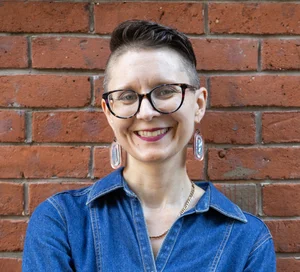
When I was in my mid-30s, I realized two important things about my identity - I was bisexual and I had ADHD. As a femme-presenting woman who had done well in school and exclusively pursued relationships with men, both these identities initially surprised me, until I realized that I’d actually been masking as a heterosexual neurotypical woman. I wasn’t lazy or incompetent, I had difficulty with motivation and executive functioning. I didn’t just think women were pretty because the male gaze had conditioned me to - I was attracted to women and non-binary folks.
Of course, these two realizations were immediately followed by self-doubt - was I just lying to myself and others for attention? - and shame - how had I, a mental health professional, spent so long unaware of basic truths about myself? And ok, maybe both these identities were real, but not as real as they were for some people - some people really struggled with ADHD, some people really lived authentically bisexual lives.
For many of us, identity is an ongoing, ever-evolving process that doesn’t stop when we hit adulthood. New experiences, new information, new interactions can all reveal something we didn’t know about ourselves before. Realizing or accepting part of your identity as an adult doesn’t invalidate your past or present experiences, nor does it mean you are or were lying. It just means that you’ve added a new filter or two to help you experience the world a little (or a lot) more authentically.
That said, there can also be complicated feelings of grief, guilt, anger, and shame that arise when we come to identities at a later age. We can mourn the time we feel we lost or be angry at people who denied us opportunities. All of these emotions deserve time and space to be heard.
You are valid. Your identity is valid. And if that identity changes again in a year, five years, 10 years? It will be valid then too.